

近期內容
REELS · 2026-05-22
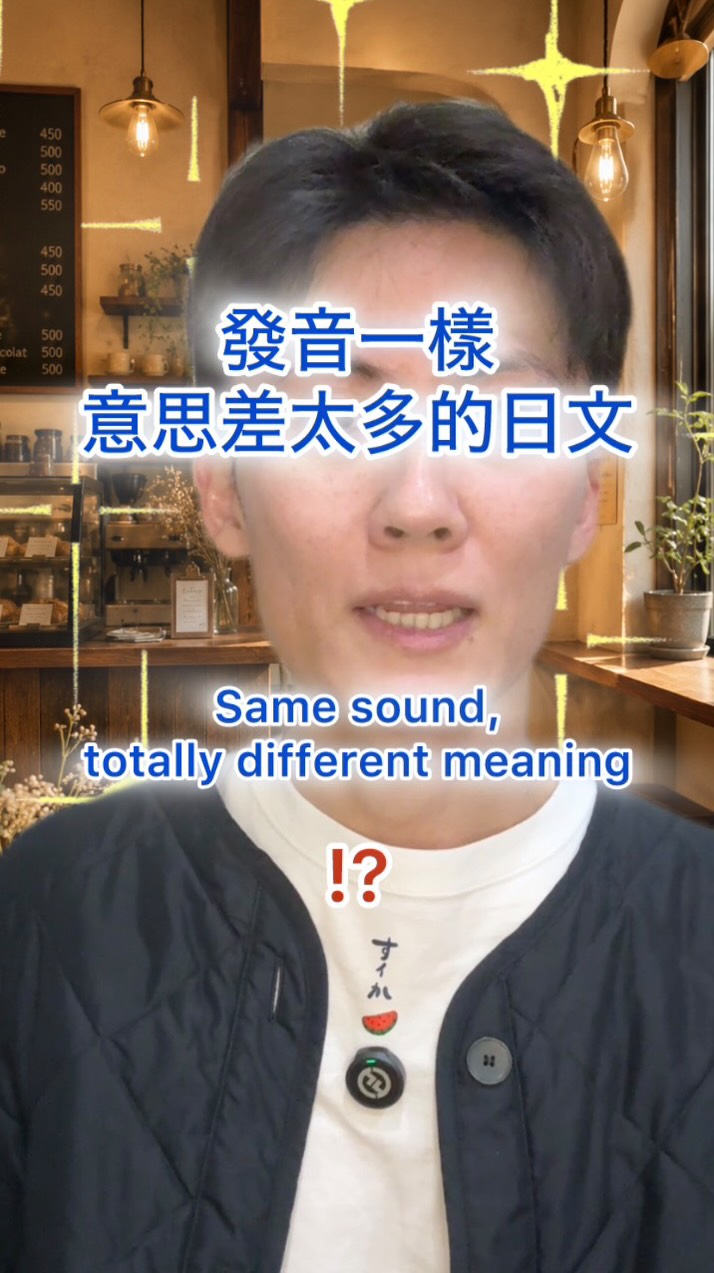
日文裡有些字,發音一模一樣,意思卻完全不一樣。 「持てますか?」=你拿得了嗎? 「モテますか?」=你受歡迎嗎?/有魅力嗎? 發音一樣,但意思完全不一樣。 店員只是問: 「兩杯咖啡,你拿得了嗎?」 結果 Kevin 以為店員覺得他很受歡迎,整個心情超好(笑) 然後不知道為什麼,開始講起自己的桃花期。 明明發音一樣,意思卻不一樣, 到底要怎麼分辨啊…… 答案是:日本文化裡的「讀空氣」。笑 順帶一提, 「モテ期」後面常接的動詞是「来る」。 也就是「モテ期が来る」。 在日本常聽到一種說法: 「人生會有三次桃花期。」 可是すいか先生到現在一次都還沒來, 這到底是怎麼回事!? 大家的桃花期來過幾次呢?留言告訴我(笑) In Japanese, some words sound exactly the same, but their meanings are completely different. 「持てますか?」 = Can you carry it? 「モテますか?」 = Are you popular? / Are you attractive? Same sound, totally different meaning. The staff only asked, “Can you carry two coffees?” But Kevin thought the staff was saying he was attractive, so he suddenly got really happy. lol For some reason, he even started talking about his “popular phase.” How are we supposed to tell the difference when the sound is exactly the same…? The answer is: the Japanese culture of “reading the air.” lol By the way, the verb often used with 「モテ期」 is 「来る」, as in 「モテ期が来る」. In Japan, people often say, “Your popular phase comes three times in your life.” But Suika Sensei hasn’t had even one yet… What’s going on!? How many popular phases have you had? Let me know in the comments. lol
查看內容 ↗
REELS · 2026-05-08
日文有時候 只差一個小小的音 意思就會完全相反😱 例如… 「うん🙂」= Yes 「ううん🙅♂️」= No 很多人第一次聽都會想: 「欸?這不是幾乎一樣嗎!?😂」 但日本人會靠著非常細微的 停頓、拉長、語氣變化 自然地分辨意思。 所以很多學日文的人都會崩潰: 「到底哪裡不一樣啦🤣」 日文不只是文法難, 連聲音長短、節奏、語調 都可能改變意思。 也因為這樣, 日文才會被很多人覺得又難又有趣。 你聽得出來 「うん」跟「ううん」的差別嗎?👂🇯🇵 ⸻ In Japanese, sometimes just ONE tiny sound can completely change the meaning 😱 For example… “うん 🙂” = YES “ううん 🙅♂️” = NO A lot of learners hear this and think: “Wait… aren’t they basically the same!? 😂” But native Japanese speakers naturally understand the difference through: ・tiny pauses ・sound length ・intonation ・rhythm That’s why many Japanese learners struggle with listening at first 😅 Japanese doesn’t only depend on grammar. The length of a sound or the way you say it can completely change the meaning. That’s what makes Japanese difficult… but also really fascinating. Can YOU hear the difference between “うん” and “ううん”? 👂🇯🇵 #日文 #japanese
查看內容 ↗
REELS · 2026-05-05
你有認真練習過面試嗎? 很多人都覺得「應該沒問題吧」,就直接上場了。 但其實,一句話的說法或一點點語氣差異,就會大大影響對方對你的印象。 你以為自己只是正常在講話,對方聽起來卻可能完全不一樣。 有準備的人跟沒準備的人, 差距在面試當下會非常明顯。 而且真的不是誇張, 那種「欸?你剛剛真的那樣說?」的失誤,其實很常發生w 建議還是先練習一下再去。 Have you ever actually practiced for an interview? A lot of people just think, “I’ll be fine,” and go in without any preparation. But in reality, even a small choice of words or tone can completely change how you’re perceived. You might think you’re speaking normally, but it could come across very differently to the interviewer. The difference between people who prepare and those who don’t shows up big time in the actual interview. And honestly, it’s not even an exaggeration— those “Wait… did you really just say that?” moments happen more often than you think lol You might want to practice before going in. Seriously #學日文 #learnjapanese
查看內容 ↗
REELS · 2026-04-25
🍉→有時候學語言最可怕的不是不會說,而是「聽錯」😅 其實在真實情況中,濕疹有很多不同的說法,所以不太可能會發生這種情況喔☺️ 這個影片是為了讓大家感受和享受這些發音相似的詞語而做的😍 這支影片是根據林小姐的真實經驗改編的。 對住在日本的日本人來說, 有時候真的很難分辨台灣人的名字哪個是姓、哪個是名。 「濕疹(shī zhěn)」跟「出身(chū shēn)」… 真的差很多啊😂 結果對方一直很認真地回答「台灣」, 我也開始懷疑是不是我問錯了🤣 而且日文還不只這個… 還有👇 ・失神(しっしん) ・出資(しゅっし) ・出社(しゅっしゃ) 全部聽起來都差不多😇 語言真的很有趣, 差一個音,整個意思完全不一樣。 所以如果你也曾經聽錯、說錯, 不用覺得丟臉。 那其實就是學習的一部分👍 (但說「起司!」那個…這跳太多了吧😂) ⸻ Sometimes the hardest part of learning a language isn’t speaking… it’s mishearing 😅 This video is based on Ms. Lin’s real experience. For Japanese people living in Japan, it can sometimes be hard to tell which part of a Taiwanese name is the family name and which is the given name. “Rash” and “where are you from”… not even close 😂 The other person kept seriously answering “Taiwan,” and I started wondering if I was the one messing up 🤣 And it’s not just that… Japanese has a lot of similar sounds like: ・shisshin (fainting) ・shusshi (investment) ・shussha (going to work) They all sound almost the same 😇 Language is funny like that — just one sound can change everything. So if you’ve ever misheard or misspoken, don’t feel embarrassed. That’s just part of the process 👍 (But saying “cheese!”… that escalated way too fast 😂)#日文 #にほんご #learnjapanese
查看內容 ↗
REELS · 2026-04-22
日文的發音也太容易搞混了吧😇 ワンちゃん🐶=小狗 ワンチャン=有可能 王ちゃん=王先生的小孩 幾乎一樣的發音,意思卻完全不同😂 難怪會直接聽到崩潰 👉 你有遇過這種情況嗎? ⸻ Japanese has way too many similar sounds 😇 “Wanchan” 🐶 = dog “Wanchan” = maybe “Wang-chan” = Mr. Wang’s kid Almost the same sound, totally different meanings 😂 No wonder conversations break 👉 Ever experienced this? #日文 #學日文
查看內容 ↗