← 返回創作者庫
Ancient Romans YouTube 頻道頭像

YouTube 頻道

Ancient Romans

@Ancient Romans · AU

i post videos about ancient humans

查看 YouTube 頻道
訂閱數3,860
觀看數4,829
影片數19

近期影片

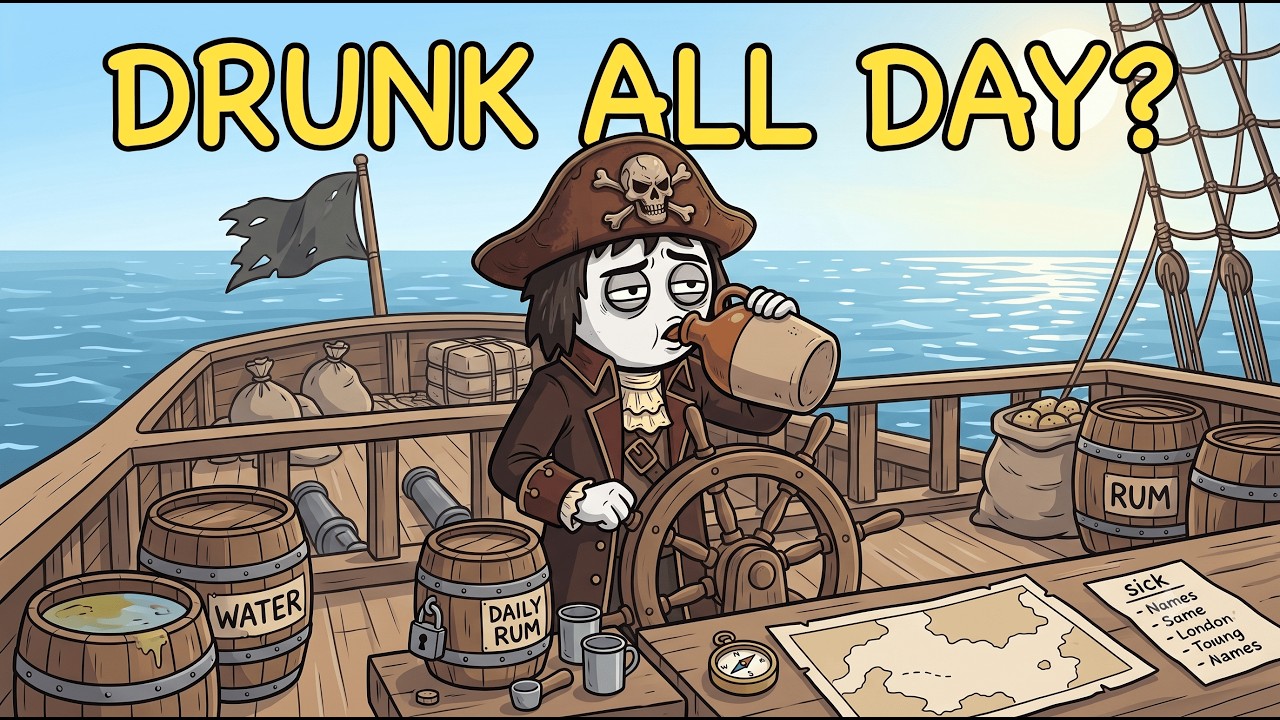
Why Did Pirates Drink So Much Rum at Sea? 縮圖

Why Did Pirates Drink So Much Rum at Sea?

Pirates did not drink rum because they liked it. They drank it because the water stored in wooden barrels in Caribbean heat was a bacterial hazard that had killed men on every voyage before this one, rum was the accidental waste product of Caribbean sugar production that cost almost nothing, and mixing the two in the right ratio killed enough bacteria to make the water survivable. Nobody on board knew why it worked. Germ theory would not exist for another hundred and fifty years. They just knew that men who drank their water mixed with rum died of dysentery less often, and on a ship where a sick crew meant a dead ship, that observation was everything. This is the full story of why pirates drank so much rum at sea — the accidental origins of rum as distilled sugar waste that Caribbean plantations could not give away, the bacterial reality of fresh water stored in tropical heat for weeks, the disinfectant mechanism that the rum was performing without anyone understanding it, the dilution ratio that pirates were using a generation before the Royal Navy formalised it as grog, the written pirate codes that actually limited drinking rather than encouraged it, and what chronic rum consumption was doing to the bodies of the men who depended on it in ways that nobody could have described in 1715 but that experienced captains were compensating for through observation alone.
觀看 23按讚 1留言 0
觀看影片 ↗
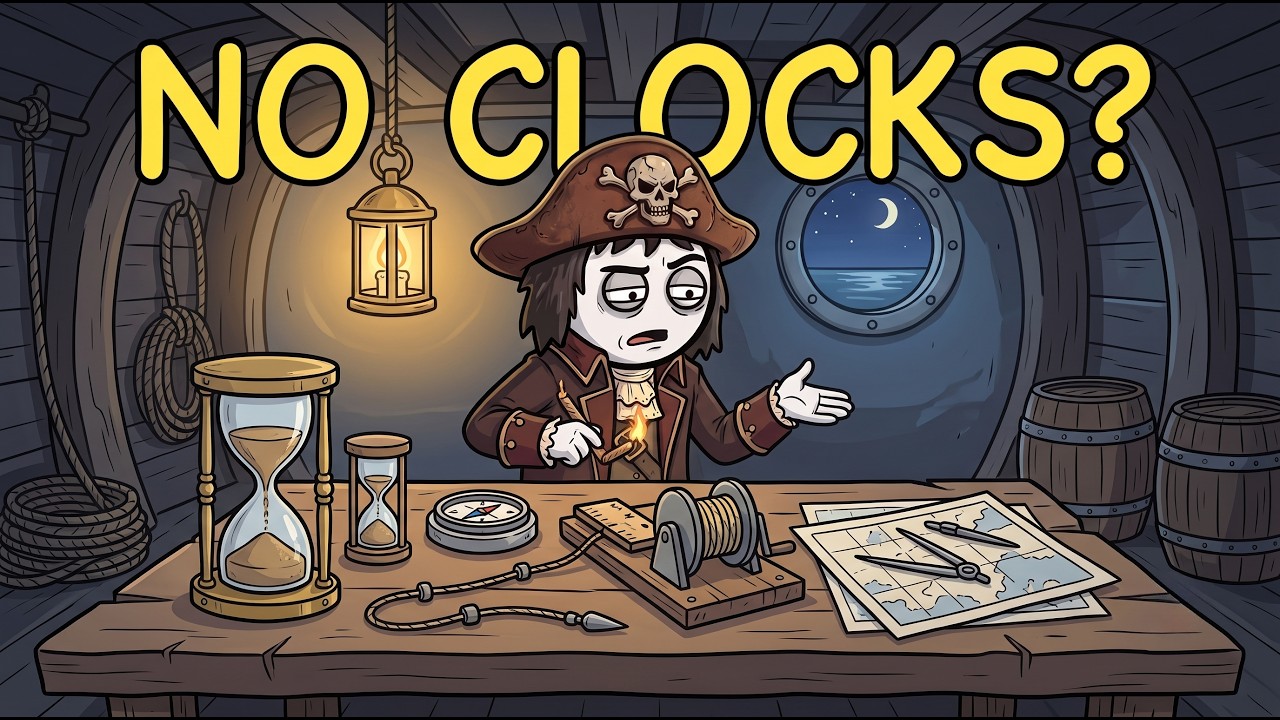
How Pirates Kept Time With No Clocks on a Ship in 1715 縮圖

How Pirates Kept Time With No Clocks on a Ship in 1715

The watch bell system that structures time on every naval vessel in the world today was standardised by pirates. The noon sight ritual that remains the foundation of traditional celestial navigation traces back to pirate ships in 1715. The knot as a unit of speed — still used in aviation and maritime navigation today — comes from a physical piece of wood on a knotted line thrown over a stern. None of it was invented by a scientist. It was built from one problem: in 1715, there was no clock that worked at sea, and without time, there was no position, and without position, the ocean could kill you from any direction at any moment without warning. This is the full story of how pirates kept time with no clocks on a ship — the sandglass and its hidden failure modes that accumulated into longitude errors large enough to cause shipwrecks, the noon sight ritual that reset timekeeping daily against the one celestial event no mechanical error could corrupt, the dead reckoning system that combined compass, chip log, and sandglass into a running position estimate, and the 1707 Royal Navy disaster that killed more than 1,400 sailors and demonstrated exactly what happened when the same longitude-blind environment pirates operated in every day finally produced a catastrophe too large to ignore.

觀看 15按讚 0留言 0
觀看影片 ↗
How Did Pirates Survive Endless Rain in The Middle Of The Ocean? 縮圖

How Did Pirates Survive Endless Rain in The Middle Of The Ocean?

The waterproof jacket in your wardrobe descends from a problem pirates solved in 1712. The oilskin principle — oil filling the spaces between cloth fibres to repel water — is unchanged from the first pirate who rubbed linseed oil into a canvas coat and noticed his watch became bearable. The sou'wester hat's extended rear brim was shaped by the specific aerodynamics of wind-driven rain on a deck. None of it came from a textile engineer. It came from eighty men on a ship who were wet and could not afford to stop functioning. This is the full story of how pirates survived endless rain — the physiological cascade that wet cold started in a crew member's hands and feet within thirty minutes on deck, the below-decks water problem that nobody who has not lived on a wooden ship in rain has ever considered, the oilskin technology that was already in maritime use before anyone understood why it worked, the pump rotation that intensified in heavy weather until it became a physical drain on top of every other demand the rain was already making, and the failed attempts to seal below-decks spaces that created mould conditions worse than the water they were trying to exclude. What pirates figured out about waterproofing, wool insulation, bilge management, morale in sustained wet conditions, and the ventilation trade-off between keeping water out and keeping air moving became the practical foundation of maritime wet-weather doctrine long before any scientist had the instruments to explain why any of it worked.

觀看 17按讚 0留言 0
觀看影片 ↗
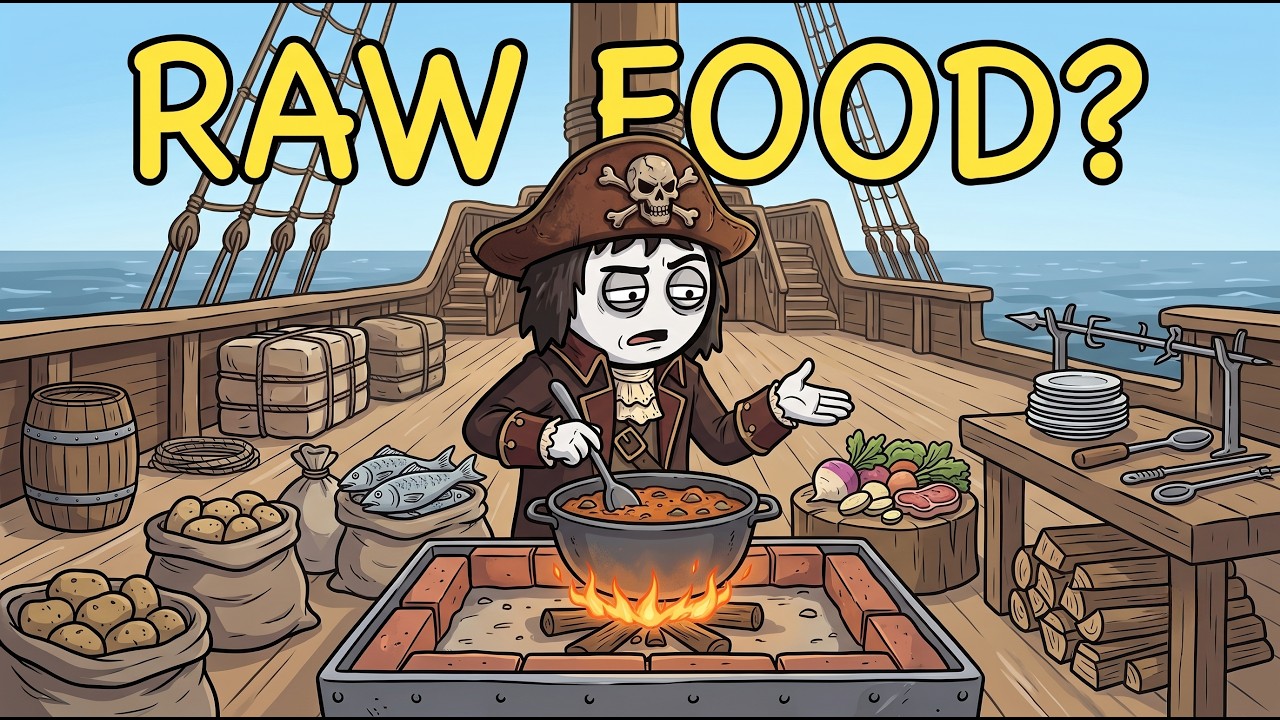
How Pirates Cooked Hot Food in the Middle of the Sea in 1712 縮圖

How Pirates Cooked Hot Food in the Middle of the Sea in 1712

The gimballed stove in every offshore sailing yacht today was pioneered by pirates. The batch-preparation logic used by expedition cooks on Antarctic research stations traces back to pirate cook rooms in 1712. The fire management discipline that keeps a ship's kitchen from becoming a ship's funeral pyre was worked out not by engineers but by a man with one leg, managing a cauldron over an open fire in a tar-soaked wooden room, twice a day, in the middle of the ocean. This is the full story of how pirates cooked hot food in the middle of the sea — the physics of suspended cauldrons, the gimballing principle applied to cookware two centuries before it became a design standard, the batch-preparation system that fed a crew through stretches of rough weather when no fire was possible, and the sandbox deck fires that burned ships down when the wind shifted at the wrong moment.

觀看 46按讚 2留言 1
觀看影片 ↗
How Pirates Survived Freezing Atlantic Nights without Heating in 1715 縮圖

How Pirates Survived Freezing Atlantic Nights without Heating in 1715

The layering system used by every cold-weather expedition team today was refined by pirates. The understanding that alcohol accelerates heat loss rather than preventing it was documented by pirate captains two centuries before medical science explained the vasodilation mechanism. The body heat sharing technique that wilderness survival manuals still recommend against hypothermia was a standard practice on pirate ships in 1715. None of it came from a researcher. It came from men standing watch on a deck in the cold and the wind and the wet, watching other men go through a sequence they had learned to recognise, with a narrow window to intervene before the sequence became irreversible. This is the full story of how pirates survived freezing nights at sea without heating — the three-stage hypothermia progression pirates recognised without medical vocabulary, the wool layering principle discovered empirically two centuries before the thermodynamic reasoning was formalised, the galley rotation system that managed collective body heat as a resource, and the rum mistake that felt like warmth and accelerated death. What pirates figured out about cold exposure, wind chill, layering, alcohol, and the collective heat of an enclosed crew became the practical foundation of cold-weather survival doctrine long before any scientist had the instruments to explain why it worked.

觀看 2,111按讚 37留言 1
觀看影片 ↗
How Pirates Slept on a Ship That Never Stopped Moving in 1712? 縮圖

How Pirates Slept on a Ship That Never Stopped Moving in 1712?

The hammock in your camping store was invented by pirates. The military watch rotation used by every navy in the world traces back to pirate ships. The understanding that alcohol before sleep impairs rather than restores was documented by pirate captains two centuries before sleep researchers confirmed it in a laboratory. None of it came from a scientist. It came from eighty men on a dark, moving, creaking ship in 1712, trying to stay sharp enough to stay alive. This is the full story of how pirates slept on a ship that never stopped moving — the watch rotation system that distributed fatigue evenly across a crew, the physics of why the hammock worked when everything else did not, the phenomenon they called going strange when sleep deprivation pushed men past the point of reliable judgment, and the rum experiment that made everything worse while feeling like it was helping. What pirates figured out about rest, timing, rapid sleep onset, and the relationship between alcohol and sleep quality became the foundation of military sleep doctrine centuries before neuroscience had the tools to explain why any of it worked.

觀看 15按讚 0留言 0
觀看影片 ↗

資料擷取時間:2026-09-13T01:01:07.000000Z

公開欄位僅來自目前發布的 YouTube 頻道快照;缺值以「—」呈現。